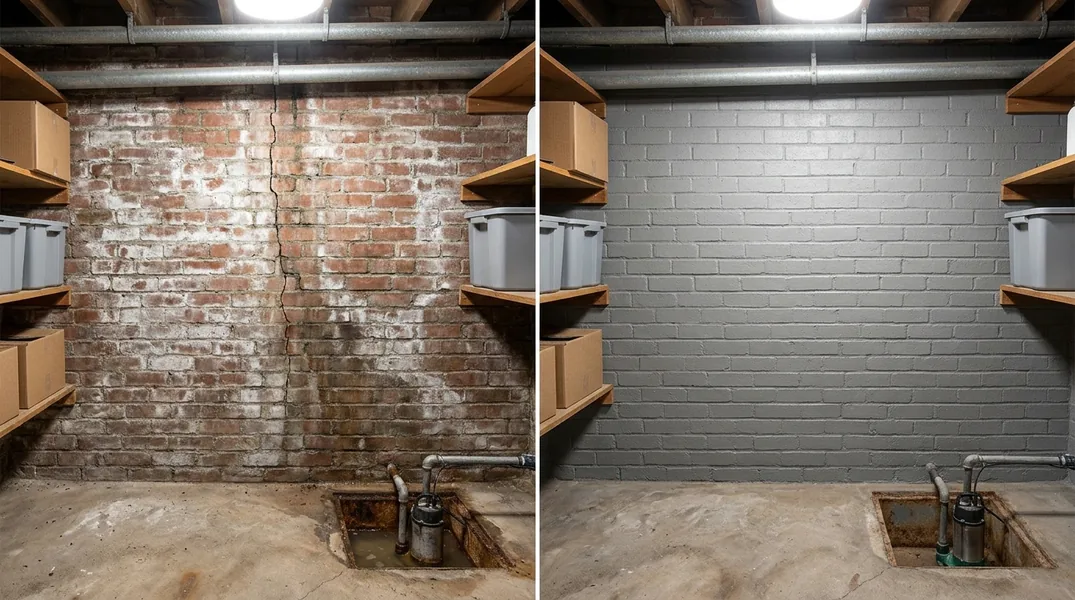
Why Spring Is the Riskiest Season for a Des Moines Basement
If you have lived in Des Moines for more than a year, you already know the pattern. Winter dumps snow across central Iowa, the ground freezes deep, and then March and April arrive with warm days, rain, and rapid thaw. That combination is exactly what makes a Des Moines snowmelt basement so vulnerable. The frozen soil cannot absorb the sudden rush of water, so it flows along the surface and down the sides of your foundation instead.
At the same time, the soil around your home is thawing from the top down. Water trapped in the upper layers has nowhere to go but toward the path of least resistance, which is often the seam where your basement wall meets the footing. Add a heavy spring thunderstorm on top of that, and the pressure against your foundation can climb quickly. This is why so many homeowners discover a spring thaw basement leak in the same few weeks every year, even when the basement stayed dry all winter.
How Snowmelt and River Flooding Threaten Foundations
There are two very different flooding problems in central Iowa, and it helps to understand both. The first is snowmelt and rainfall saturating the soil right around your house. This is a groundwater problem, and it shows up as seepage at the cove joint, damp walls, white powdery efflorescence, or water pooling along the floor edge. The second is river flooding basement risk from the Des Moines River and Raccoon River when spring rains push them over their banks. River flooding can overwhelm municipal storm systems and raise the water table across whole neighborhoods.
You cannot control the rivers, but you can control how your own foundation handles water. Homes in low-lying areas near the rivers face the highest risk, yet even houses on higher ground deal with saturated soil after a wet spring. The good news is that most groundwater seepage is preventable with the right drainage and sealing strategy. The key is to act before the water finds its way in, not after you are standing in it.
Warning Signs of a Spring Thaw Basement Leak
Spring leaks rarely announce themselves with a flood. They usually start small, which is why they are easy to ignore until the damage is significant. Watch for damp patches low on the walls, a musty smell that lingers after you air the room out, or paint that bubbles and peels near the floor. Water staining on concrete, rust rings around nails in a finished wall, or a floor that feels slightly soft are all clues that moisture is already getting in.
Outdoors, take a walk around the foundation after a rain. If you see water pooling within a few feet of the house, gutters dumping right at the base, or soil that slopes back toward the walls, you have found the source. Correcting grading and downspouts is a simple first step, but persistent seepage usually points to a deeper drainage issue. A professional inspection can tell you whether you are dealing with a minor surface problem or something that needs a real Basement Waterproofing solution.
Flood Prevention Steps Every Homeowner Can Take Before the Thaw
Flood prevention starts with the simple things you can do yourself. Clear snow away from the foundation as it melts, and make sure it does not pile up against the walls. Extend downspouts several feet from the house so roof water lands on the lawn instead of the soil next to the basement. Check that the ground slopes away from the foundation on all sides, and regrade any low spots that hold water. Keep window wells clear and covered, and test your sump pump before the spring rains arrive by pouring a bucket of water into the pit.
If your sump pump is old, noisy, or has ever failed during a storm, consider a backup system before you need it. Power outages during spring thunderstorms are common, and a pump without backup is useless exactly when you need it most. These steps buy you time, but they do not fix a foundation that is already taking on water. When prevention is not enough, a proper Foundation Waterproofing plan addresses the water at its source.
Basement Waterproofing Near Me: When to Call a Pro
Some problems are clearly do-it-yourself territory, and others are not. If you have tried grading, downspout extensions, and a working sump pump, and you still get water every spring, it is time to bring in a professional. Recurring seepage, cracks that widen, bowing walls, or water that appears during every heavy rain are signs that surface fixes will not be enough. Homeowners in West Des Moines and Ankeny face the same seasonal pressures, and the fix is the same: manage the water before it reaches the basement.
Depending on what we find, the solution may be an Interior Drain Tile System that captures water under the floor and routes it to a sump, or Exterior Basement Waterproofing that stops water at the wall. Many homes benefit from a combination. A thorough inspection tells you which approach fits your situation rather than guessing. If you are not sure where to start, reach out for a free estimate and we will walk you through what your basement actually needs.
Flooded Basement Cleanup and Basement Waterproofing Cost in Des Moines
If water has already gotten in, safety comes first. Do not enter a flooded basement if there is any chance the water is contacting electrical outlets or appliances, and shut off power at the breaker only if you can do so safely from a dry location. Remove standing water with a wet/dry vacuum or pump, then dry the space thoroughly with fans and dehumidifiers to prevent mold. Discard soaked cardboard, carpet, and porous materials that cannot be dried quickly. Document the damage with photos before you clean up, since your insurer will want them.
Once the mess is handled, the real question is how to keep it from happening again. The pricing for waterproofing depends on the size of your basement, the type of system, and how much excavation is involved, which is why a site visit matters more than a phone guess. The cost of cleanup and repairs after a flood almost always exceeds the cost of preventing one. Call Des Moines Waterproofing at (515) 834-4110 to schedule an inspection and get a clear plan before the next spring thaw. Homes in Urbandale and across the metro trust us to keep their basements dry season after season.
Looking for a professional basement waterproofing contractor in Des Moines? Des Moines Waterproofing responds fast for all your basement waterproofing needs.
Get a Free QuoteOur services: Basement Waterproofing · Interior Drain Tile System · Exterior Basement Waterproofing